RAF Cranwell Gliding Club is open to all military personnel (and their dependants), full time reservists, veterans, civil servants, volunteer reserves (UAS / Air Cadets) as well as select civilians with specialist skills. If you’re unsure about eligibility to join please send us a message and we’ll be able to clarify.
How do I join?
The club operates every weekend and bank holiday. We brief outside our hangar next to OASC at 09:00 each morning and kindly ask any new members looking to join to arrive in time for the brief. At the club you will be met by the Duty Instructor and Duty Pilot. These are club volunteers who have been rostered to supervise and manage the daily operation. To ensure we know to expect you on your first visit please send us a message so we can pass the message on the duty team.
If you’re looking to join the club we recommend you initially purchase a temporary membership. This will give you access to the club for 28 days and you just need to pay for the flying fees accrued. If you decide that you want to extend your membership you can then upgrade to an annual membership and pay the outstanding difference on your membership bill.
How does the club work?
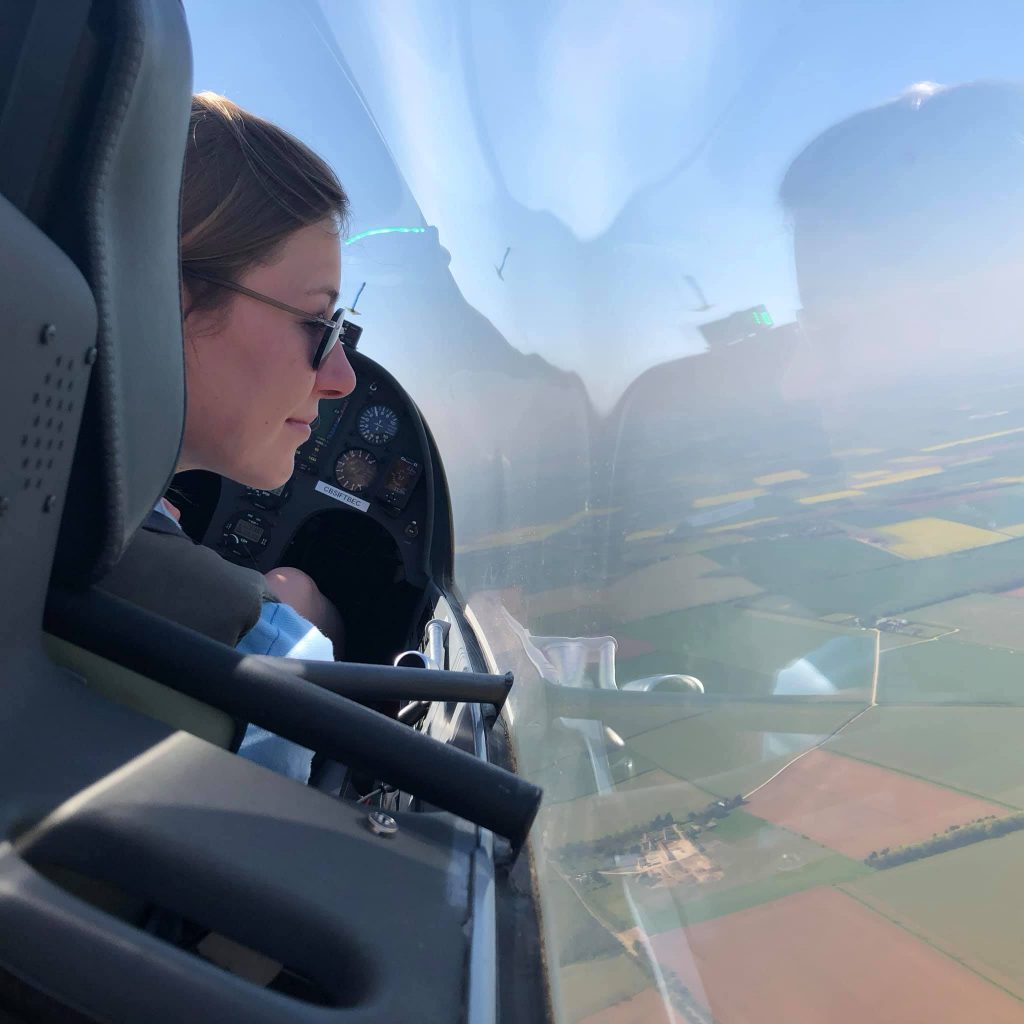
Everyone on the club is a volunteer. From the instructor who takes you flying to the person driving the winch. This is the reason why gliding is one of the least expensive ways to fly fixed wing aircraft.
Teamwork is essential to make the operation work. At least 5 people are needed to get one glider airborne; we need a winch driver, a launch point supervisor, a cable retrieve driver and a wing runner.
We all take it in turns to fly and when not in a glider we’re helping other club members get airborne. Generally we start flying from 10:15 and we aim to have the hangar doors closed (and bar open) by 18:00 after a productive day of operations.
Is it a big commitment?
The adage “the more you put in, the more you get out” is certainly true with gliding, but we understand that for some people a full day on the airfield isn’t always possible.
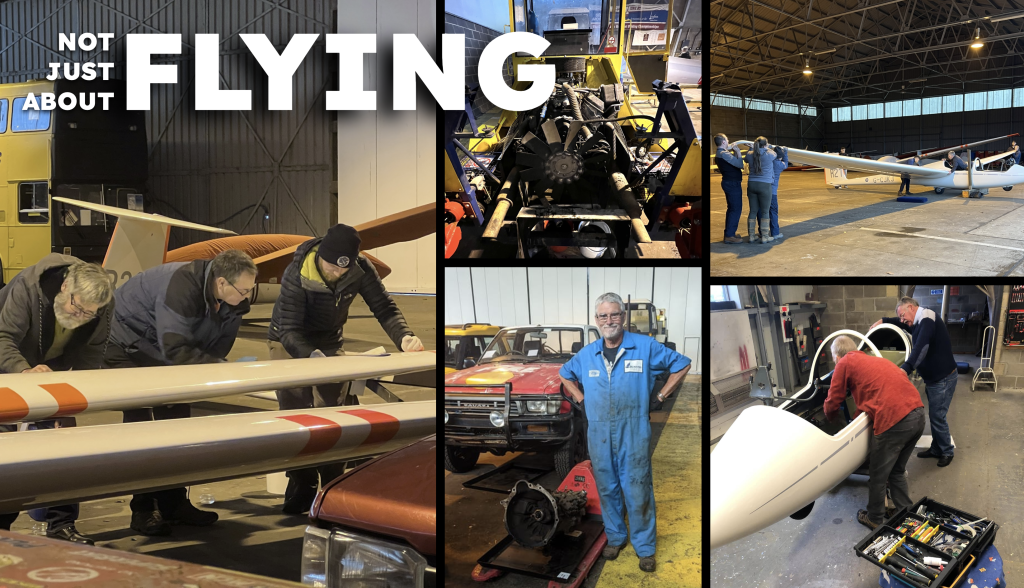
Even when the weather isn’t suitable for gliding there’s always a backlog of jobs from glider and vehicle maintenance to hangar husbandry and ground lectures that all members can get stuck in with.
Club attendance isn’t mandatory and members are welcome to spend as much, or little, time on the airfield as they wish – noting the less time spent on the airfield will result in less access to flying.
What we do expect of our members that can only attend for part of the day is to either join us in the morning to help unpack the hangar, or join us in the afternoon and stay until everything has been packed away.
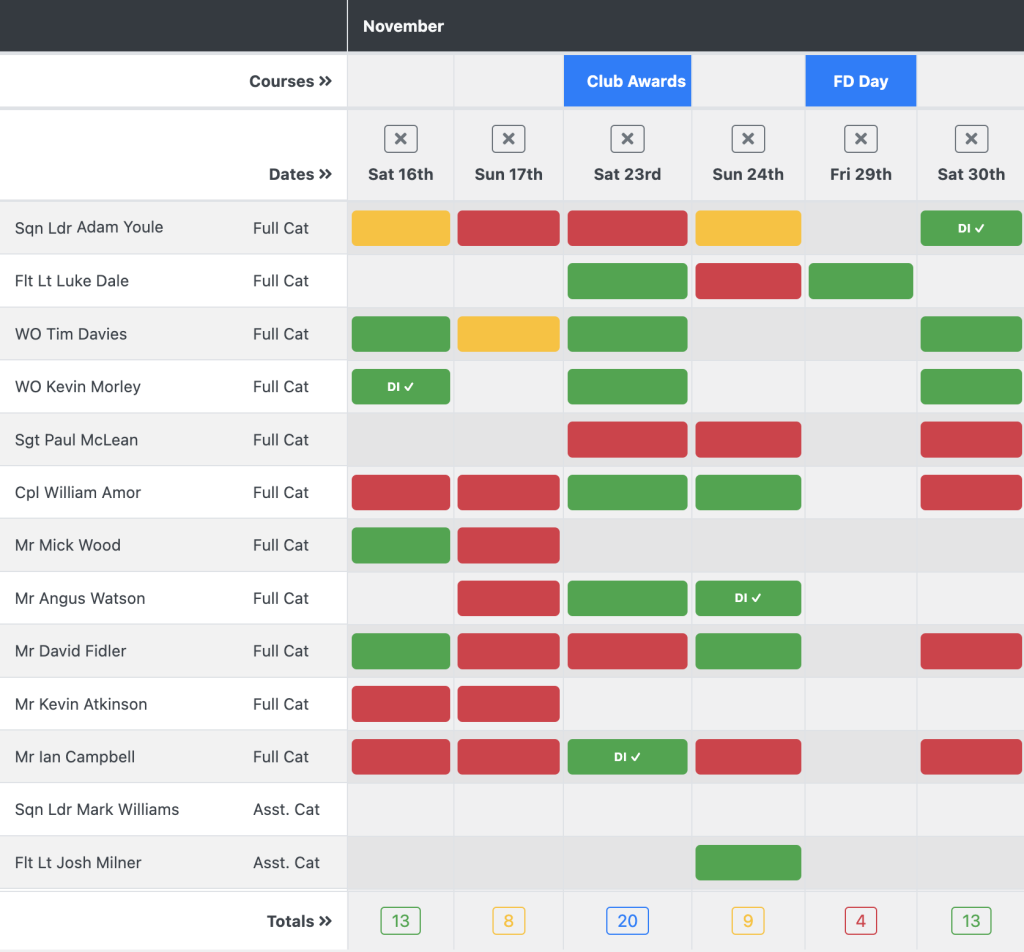
The club utilises a bespoke planning tool via our website where members can submit their expected attendance in order for us to plan our operations. Once you’ve joined up as an annual member you’ll be encouraged to sign up for an account.
We also use this planning tool to allocate duties on the club and to promulgate important flight safety updates.
What makes gliding special?
Gliding clubs are extremely social places due to the teamwork required to make the operation work. You’ll quickly make likeminded friends on the club who share the same passions for aviation.
You can fly a glider solo from the age of 14, so it’s a great activity for both young and old, attracting many family groups.
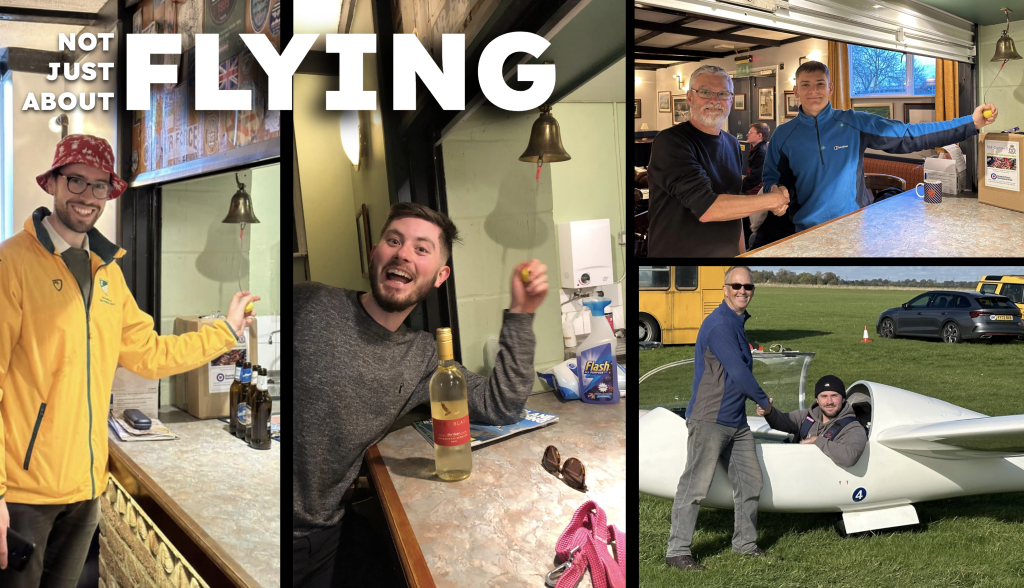
Part of the thrill with gliding is down to the uncertain nature of each flight. The unexpected thermal at the top of the launch is always a welcome delight on an unassuming day. We fly all year round, but gliding flourishes in the summer months. During this time pilots will try to achieve many of the various gliding awards and badges by flying for long durations, to height altitudes or covering long distances. Club members relish each other’s achievements and they are celebrated at the end of the day – typically with a ‘bell ring’ in the bar and round of drinks!
Where can gliding take me?
For many pilots gliding is the gateway into an aviation career. As a service club we exist to facilitate access to the sport for those who would typically not get chance to fly in their normal daily duties.
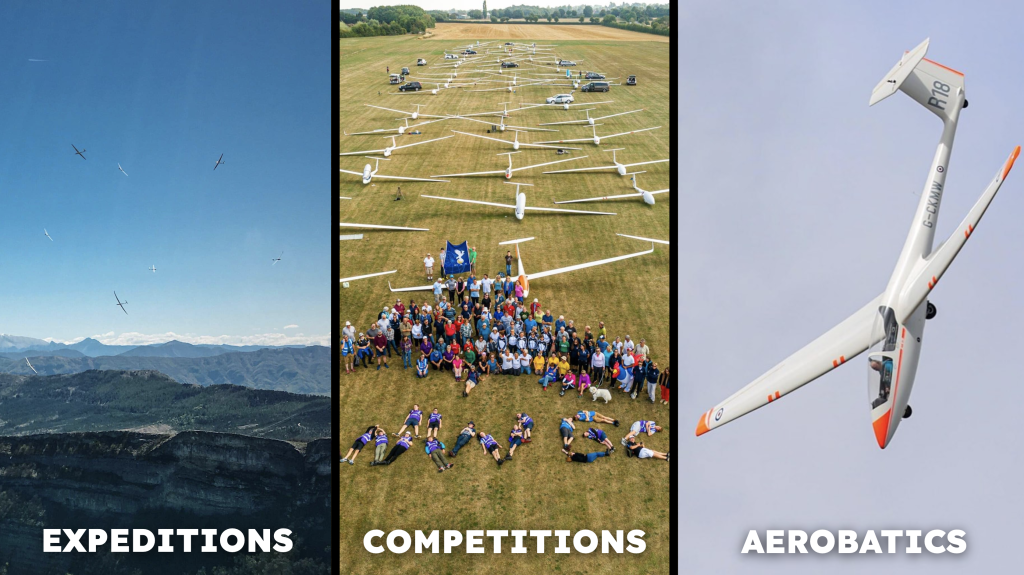
After going solo there are numerous pathways a pilot can choose to go down. RAF Gliding is defined as a ‘Category 2’ sport which allows service personnel to fly on duty in competitions, as well as undertake expeditions to the French Alps or Chilean Andes.
There are also pathways to becoming an instructor or training to become an aerobatic pilot.